An op-amp is a differential device, so it pays to split any pair of input voltages into the part it cares about and the part it should ignore. The differential input signal is the difference between the inputs, the common-mode input signal is their average:
Here is the inverting input voltage and the non-inverting input voltage, both measured to ground. is the genuine signal of interest; is whatever offset both inputs ride on together.
Recovering the originals
The decomposition is invertible, no information lost. Add and subtract:
Check: and . So any input pair is “the average, plus or minus half the difference.” The differential part separates the inputs; the common-mode part is the pedestal they both stand on.
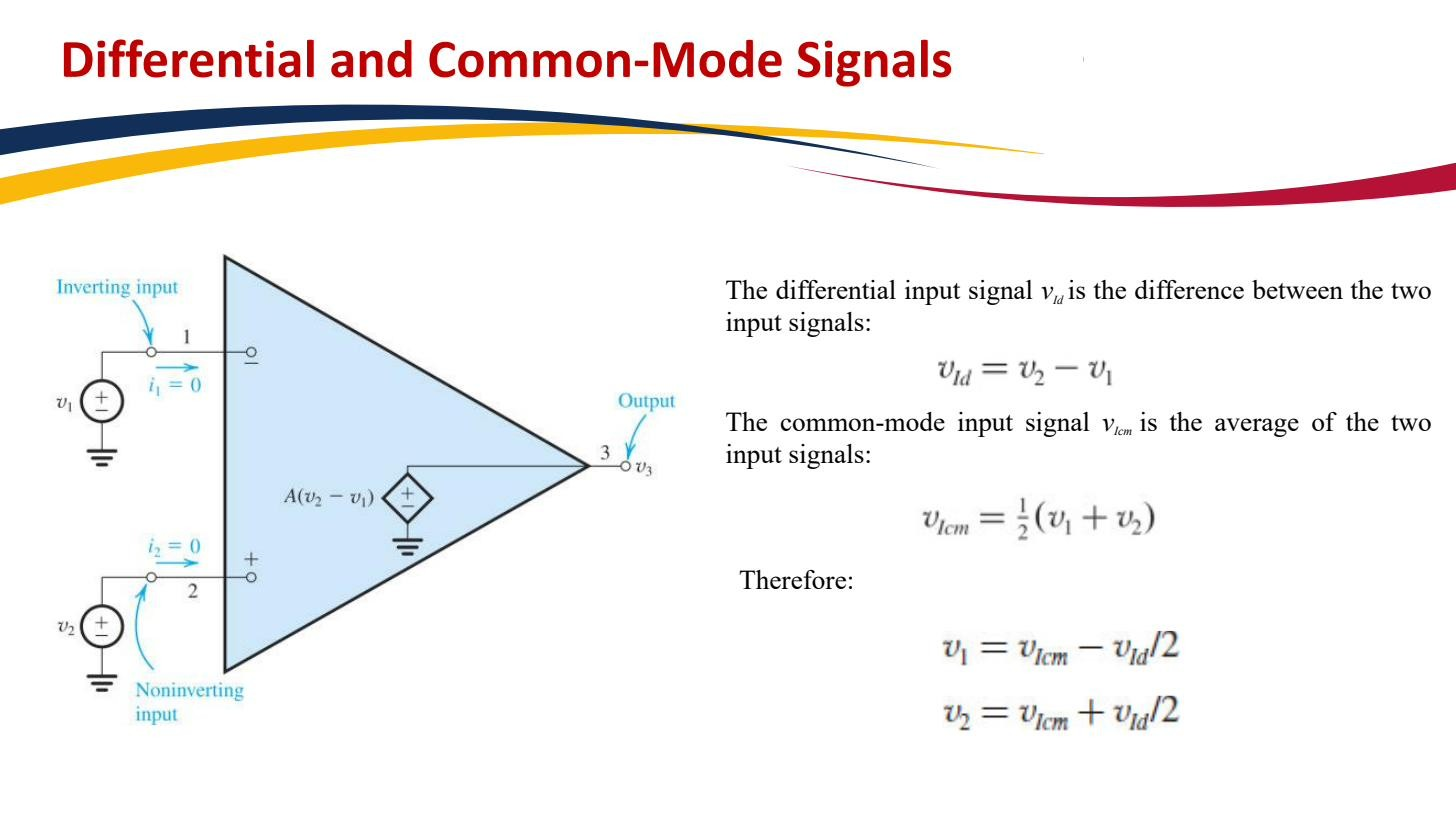 Any input pair = differential part (difference) + common-mode part (average).
Why split it this way
An ideal op-amp output depends only on : , with the common-mode part rejected entirely. A real op-amp has a small unwanted dependence on , so its output is more like , where is the differential gain and the (tiny) common-mode gain. Their ratio is the Common-mode rejection ratio.
Real measurements live in this split. A strain gauge or thermocouple produces a few millivolts of differential signal sitting on top of several volts of common-mode (noise picked up on the wires, ground-loop offsets, the bridge excitation). You want the difference and want the average thrown away, which is what a Difference amplifier, and far better an Instrumentation amplifier, is built to do. Thinking in instead of makes “amplify the signal, reject the interference” a precise, designable statement.