The source follower (common-drain amplifier) is the single-MOSFET configuration with the input at the gate, the output at the source, and the drain tied to (AC ground). Voltage gain just below 1, so it doesn’t amplify voltage. It’s a buffer: very high input resistance, very low output resistance, and the output follows the input.
Why the gain is just under 1
A small input change produces a drain (= source) current change . That current flows through the source resistor , raising the source voltage (the output) by . But the source voltage is part of : with the gate driven by and the source at ,
Substitute the first into the second and solve for the gain :
Always less than 1, but for it’s close to 1. The source follows the gate, hence the name. (Same form as the Source degeneration feedback expression; the source follower is the extreme case where the output is taken at the source itself.)
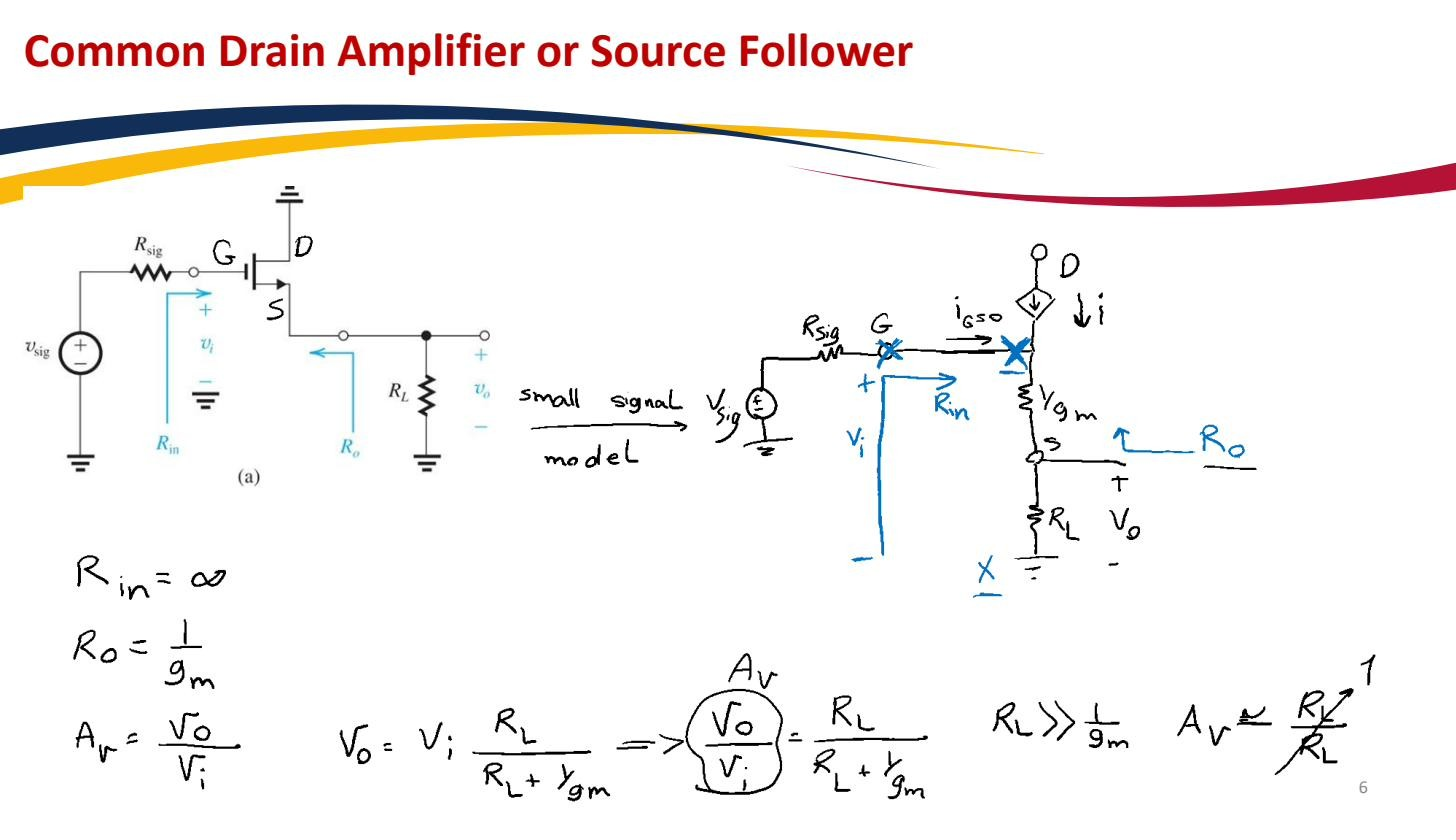 Output at source follows the gate; gain just below 1, low output impedance.
The point: impedance transformation
A gain of ~1 sounds useless until you look at the impedances:
- Input resistance: near-infinite. The gate is insulated by the Gate oxide, so the stage barely loads whatever drives it.
- Output resistance: looking back into the source, low, typically a few hundred ohms.
So it presents a near-infinite impedance to its source and a low impedance to its load, while passing the voltage through nearly unchanged. That’s a Buffer amplifier: drop it between a weak, high-impedance source and a heavy, low-impedance load so the source isn’t loaded down and the load still gets the full signal. It’s the MOSFET analogue of the BJT Emitter follower. Compare the Common-source amplifier (high voltage gain, inverting) and the Common-gate amplifier (current buffer): the source follower is the third of the three single-transistor configurations, and the only voltage buffer.
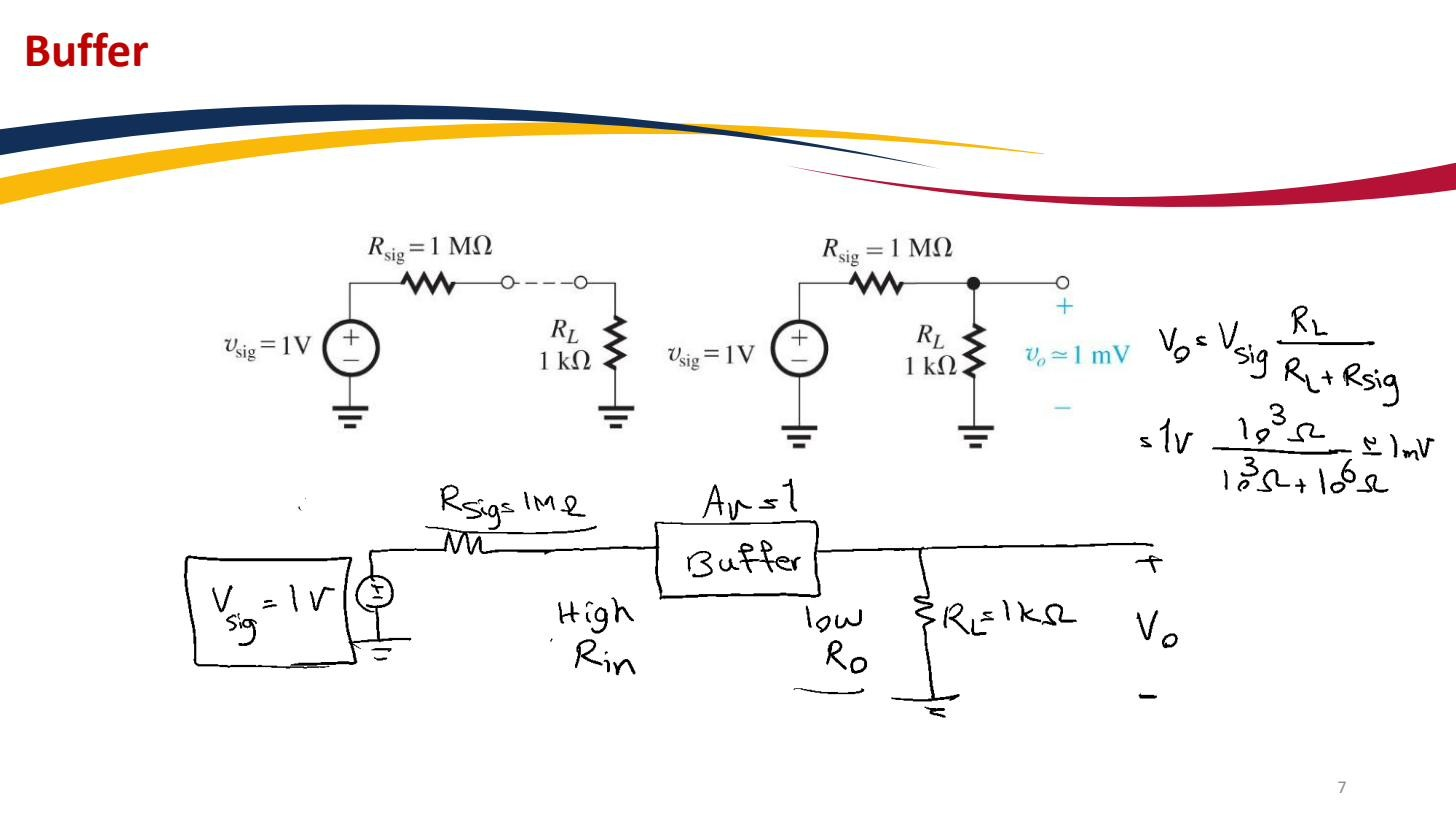 Source-follower as buffer: high , near-unity gain, low .